

Table of Contents
- Why Ringworm Spreads So Fast on the Mats
- Immediate Post-Training Hygiene Protocol
- The Best Soap for BJJ Athletes: What to Look For
- How to Clean BJJ Gear: Laundry Science That Actually Works
- Mat Hygiene and Gym Protocols You Should Expect
- Ringworm Treatment for Grapplers: What to Do If You Get It
- Common Mistakes That Undo Your Prevention Efforts
- Conclusion: Build a Routine You Can Stick To
- Frequently Asked Questions
Last Updated: September 13, 2026
Why Ringworm Spreads So Fast on the Mats
Ringworm is a highly contagious fungal infection that thrives in the warm, moist environments created by close-contact grappling. Knowing how to prevent ringworm in jiu jitsu starts with understanding why the mats are such an efficient transmission surface.
The culprit is dermatophytosis, the clinical name for the fungal infection commonly called tinea corporis on the body. These fungi feed on keratin, the protein in your skin, and they spread through skin-to-skin contact and contaminated surfaces. On a grappling mat, every scramble, every guard pass, and every sweaty round creates ideal conditions for spores to transfer from one person to another.
The incubation period can stretch from four days to two weeks, which is the dangerous part (the CDC). You can carry the fungus for days before a lesion or rash appears, training normally and passing it to training partners without knowing it. A single overlooked patch of itchiness on one athlete can seed an outbreak across an entire gym.
That's why prevention is not about one heroic cleaning session. It's about a repeatable hygiene protocol that closes every transmission route: your skin, your gear, and the mat itself.
Immediate Post-Training Hygiene Protocol
The single most effective step you can take is to shower within 15 minutes of leaving the mat. Fungal spores need time to penetrate the skin barrier, and washing them off before they settle dramatically reduces your risk.
Here's the routine that works:
- Rinse first, soap second. Warm water lifts sweat and loosens debris before you lather.
- Wash every crease and fold. Armpits, groin, behind the knees, between toes. These are the warm, dark zones dermatophytes prefer.
- Use a dedicated antifungal soap. A bar formulated for combat athletes does more than a generic body wash.
- Dry completely before dressing. Pat, don't rub, and pay attention to the same creases you washed.
- Treat any abrasions immediately. Open skin is an invitation for infection.
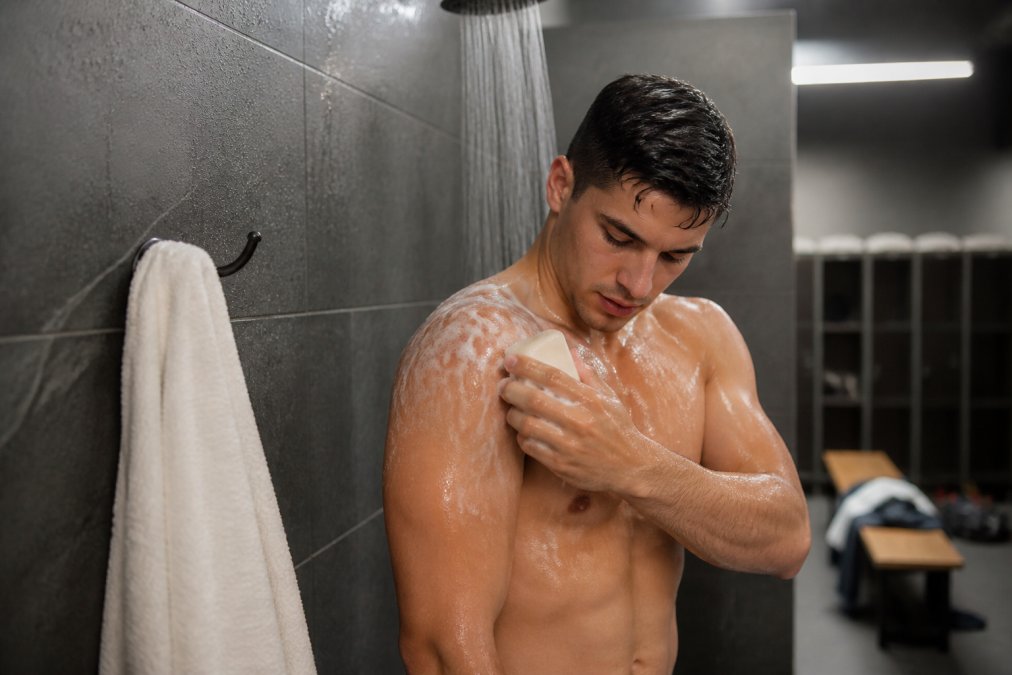
The Best Soap for BJJ Athletes: What to Look For
The best soap for BJJ athletes cleans deeply without stripping the skin's natural defenses, because a damaged skin barrier is exactly what fungi exploit. Look for a bar built around antifungal and antibacterial botanicals rather than harsh detergents.
What matters most:
- Tea tree and eucalyptus oils for their natural antimicrobial action
- Moisturizing butters and fatty oils so the bar conditions instead of drying
- No cheap fragrance oils that irritate sensitive skin
- A rich, conditioning lather that rinses clean
This is where Forged & Foam Co. earns its place in your gym bag. Their Forge Cleanse bar is built on an organic, moisturizing base and infused with a proprietary antifungal and antibacterial blend, so it cleans deep without leaving your skin vulnerable. For athletes who break out easily, the Floral Guard bar offers the same protective approach in a gentler botanical formula.

If you prefer a spray for the five-minute window before you can reach a shower, the Aegis Mist body and gear spray uses a blend of tea tree, lavender, and eucalyptus oils to knock down odor-causing bacteria on skin and gear alike.
How to Clean BJJ Gear: Laundry Science That Actually Works
Cleaning your Gi properly is where most athletes fall short, because laundry sanitation is not the same as laundry. Regular detergent removes dirt and odor. It does not reliably kill fungal spores. Dermatophyte spores are built to survive, they can persist on fabric for months in a dry gym bag, and a normal cold-water cycle with scented detergent does almost nothing to them (pubmed.ncbi.nlm.nih.gov).
The science matters here. Fungi are killed by sustained heat, by specific chemistry, or by both, not by soap alone. Here is what actually works, step by step.
1. Temperature is your primary weapon. Temperature is your primary weapon. In practice, that means the hottest setting your fabric care label allows, typically 140°F (60°C) or above for cotton Gi tops and pants (the EPA). If your Gi label caps you at warm or cold, you are relying entirely on chemistry, so do not skip step two.
2. Detergent alone is not enough, add a laundry sanitizer. Standard detergents are formulated to lift soil and oils, not to kill pathogens. Look for a laundry sanitizer or disinfectant additive whose label lists fungicidal or sporicidal claims and an EPA registration number. Follow the label's dilution and soak time exactly; most require a pre-soak or a full wash cycle to reach their stated kill claim. A capful dumped in with a fast cycle often does not meet the contact time the product needs.
3. Consider an antifungal laundry additive. Some athletes add a small amount of white vinegar to the rinse cycle to help strip residue and discourage odor-causing microbes, and others use a diluted tea tree oil additive. Neither replaces a proper sanitizer, but they support the wash. Never mix vinegar and bleach in the same load, it produces a toxic gas.
4. Dry it hot, or dry it in the sun. Spores that survive the wash can be finished off by heat. A hot dryer cycle is the simplest option. Line drying in direct sunlight adds UV exposure, which also degrades fungal cells. What you should never do is hang a damp Gi in a dark locker or bag to 'air out', that is the exact environment spores prefer.
5. Wash after every single session. Re-wearing a 'mostly dry' Gi is one of the most common ways athletes reinfect themselves. Spores do not need visible dirt to transfer.
6. Never let wet gear sit. A damp Gi in a gym bag is a petri dish. Hang it to dry the moment you get home, and if you cannot wash it that night, hang it somewhere with airflow rather than sealing it in the bag.
For gear you can't wash immediately, an antimicrobial spray buys you time until laundry day, but treat it as a stopgap, not a substitute for a real wash cycle.
Mat Hygiene and Gym Protocols You Should Expect
A clean gym is a shared responsibility, and you should hold your gym to a real standard. Mat hygiene is not optional infrastructure; it's the front line against cross-contamination. But the honest truth is that most outbreaks do not start because a gym owner is lazy, they start because an athlete is afraid to say something.
What a well-run gym actually does:
- Wipes or mops mats with a proper disinfectant between classes, not just once a day. Look for a product with a label claim against fungi or dermatophytes. Contact time matters, most disinfectants need the surface to stay visibly wet for several minutes, not a quick spray-and-wipe.
- Enforces a shoes-off-the-mat rule to keep outside pathogens off the surface.
- Requires clean training gear and trimmed nails.
- Encourages anyone with a visible rash to sit out until it's treated.
- Has a written skin-infection policy posted near the mat, so the expectation is not personal, it is the rule.
Ask your gym what disinfectant they use, at what dilution, and how often mats are cleaned. A gym that can't answer that question clearly is a gym where transmission runs unchecked.
The part nobody wants to talk about: stigma.
Ringworm carries an unfair social weight. Athletes worry that reporting a spot will get them labeled dirty, benched before a competition, or quietly judged by training partners. So they hide it, train through it, and pass it on. That silence is the single biggest reason outbreaks spread in otherwise well-run gyms.
Breaking that cycle takes a small culture shift, and it starts with how the gym frames the conversation:
- Treat ringworm like a sprained ankle, not a moral failing. It is a common fungal infection, not evidence of poor hygiene. Anyone who trains hard on shared mats can get it.
- Normalize self-checks. A 30-second scan in the locker room mirror after training catches most early lesions before they spread.
- Make reporting low-stakes. A coach who responds to 'I think I have a spot' with 'thanks for telling me, here's the protocol' keeps that athlete honest next time. A coach who reacts with disgust guarantees the next athlete hides it.
- Have a return-to-training standard. Most practitioners find that a lesion is no longer considered contagious once it has fully cleared and a topical treatment course has been completed, but the specific call belongs to a doctor, not a training partner's opinion.
- Protect the reporter. If an athlete sits out and someone asks why, the answer is 'out for a few days,' not a public diagnosis.
Ringworm Treatment for Grapplers: What to Do If You Get It
If you spot a ring-shaped lesion, act fast and stay off the mat. Ringworm treatment for grapplers follows the same principles as for anyone else, but the stakes are higher because you train in close contact.
For a mild, localized infection, many athletes use an over-the-counter topical cream containing clotrimazole or terbinafine. Apply it as directed, keep the area clean and dry, and cover it during the day.
The non-negotiable rule: quarantine yourself from training until the infection is fully resolved. A doctor or dermatologist can confirm the diagnosis and, for stubborn or widespread cases, prescribe stronger treatment. Return to the mat only when the lesion has completely cleared and a professional has given the go-ahead.
Common Mistakes That Undo Your Prevention Efforts
Even disciplined athletes sabotage themselves with a few repeatable errors. Fix these and your prevention routine actually holds.
- Re-wearing gear "just for drilling." Spores don't care that the session was light.
- Showering at home instead of the gym. The window between mat and shower is when transmission happens.
- Sharing towels, razors, or gear. Skin-to-skin contact isn't the only route; shared items carry spores too.
- Ignoring a small itchy spot. Early treatment is easy. Late treatment is a gym-wide problem.
- Letting a damp Gi sit overnight. Moisture management is half the battle.
Beyond the Gi, maintain your other gear too. Wash your belt, sanitize your bag, and clean your headgear and rash guards with the same care you give your Gi. Gear maintenance beyond the Gi is the detail most athletes skip, and it's often where reinfection hides.
Conclusion: Build a Routine You Can Stick To
The athletes who avoid ringworm aren't paranoid. They're consistent. They shower fast, wash their gear properly, and treat any suspicious spot before it spreads.
Forged & Foam Co. was built for exactly this kind of athlete. Our handmade soaps use organic butters, fatty oils, and essential oils instead of cheap fragrance, and every purchase helps fund tournament fees and scholarships for young grapplers. Start with Forge Cleanse for your post-training shower, keep Aegis Mist in your bag for the minutes before you reach one, and build a routine your skin and your training partners will thank you for.

Get started with Forged & Foam Co. and train with one less thing to worry about.
Frequently Asked Questions
Can you train BJJ with ringworm?
No. Ringworm is highly contagious and spreads through skin-to-skin contact, so training while infected puts every partner at risk. It is recommended to stay off the mats until the rash is completely gone. Most cases clear in 2-4 weeks with consistent topical antifungal treatment. Covering the lesion with a bandage is not enough because sweat and friction will expose it. Wait until a dermatologist or doctor confirms the infection has cleared before returning to grappling.
What kills ringworm fungus quickly?
Terbinafine and clotrimazole are the most effective over-the-counter topical creams for ringworm, typically clearing mild cases in 1-2 weeks. For surfaces and gear, antifungal sprays containing tea tree oil or diluted bleach solutions kill dermatophyte spores. Hot water washing at 140°F or higher with a quality detergent also destroys the fungus on fabric. Always follow label instructions and complete the full treatment course even if symptoms fade early.
How long after getting ringworm can I do jiu jitsu again?
You can return once the rash has fully healed and a doctor confirms it is no longer contagious, usually 2-4 weeks after starting treatment. Some gyms require a doctor's note. Coming back early risks reinfection and spreading it to training partners. Use the time off to deep-clean your gear, sanitize your bag, and review your hygiene protocol so you are less likely to get it again.
Does washing your gi immediately prevent ringworm?
Washing your gi immediately after training significantly reduces the risk because it removes sweat, skin cells, and fungal spores before they can multiply. Use hot water and a detergent that targets fungi. If you cannot wash right away, hang the gi to dry in open air and wash it within a few hours. Never reuse an unwashed gi, even if it looks clean. Pair this with a post-training shower and antifungal soap for the best protection.
Comments
Leave a comment